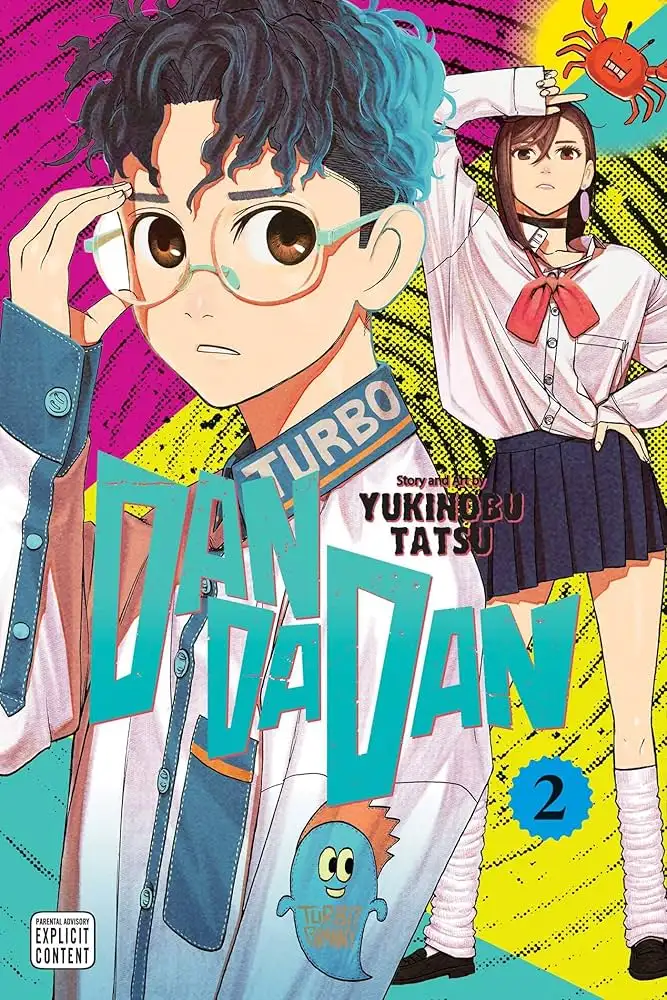
In the vibrant, ever-expanding universe of sequential art, few series have captured the global imagination quite like Yukinobu Tatsu’s eccentric masterpiece, Dandadan. From its explosive action sequences and bizarre supernatural encounters to its endearing character dynamics and genuinely hilarious dialogue, Dandadan has carved a unique niche, charming millions worldwide. But how did a series, initially serialized in Shonen Jump+, transcend language barriers and borders to become a global phenomenon so rapidly? The answer, like many in the digital age, is multifaceted, but one crucial, often controversial, player stands at the forefront: scanlation.
For those immersed in the world of manga and manhwa, the term 'scanlation' is as familiar as 'shonen' or 'isekai.' It represents a parallel, often unsanctioned, ecosystem where passionate fans bridge the gap between creators and a global audience hungry for content. On 'dandadan manga online', we're not just about celebrating the series itself; we're about understanding the journey, the culture, and the currents that bring these incredible stories to our screens. Today, we embark on an expansive journey to dissect the intricate relationship between series like Dandadan, the practice of scanlation, and the relentless evolution of how we discover, consume, and engage with our beloved digital comics.
This isn't just a discussion about legality or ethics – though those are undeniably critical components. It's about culture, community, access, and the undeniable power of fan dedication. It’s about understanding how an unofficial, volunteer-driven movement shaped the global perception and accessibility of an entire art form, forcing an industry to adapt, innovate, and ultimately, evolve.
The Unsung Architects: What Exactly is Scanlation?
Before diving into the deeper implications, let's define our terms. Scanlation is a portmanteau of 'scan' and 'translation,' referring to the process where fan groups acquire raw Japanese manga or Korean manhwa (usually by scanning physical copies or ripping digital versions), translate the text into another language (most commonly English), clean and redraw any impacted art, typeset the new dialogue, and then distribute the finished product online, typically for free.
This is no simple feat. A typical scanlation workflow is an elaborate dance of specialized roles:
- Raw Provider: The person who obtains the original Japanese chapters, often through buying weekly magazines or digital subscriptions.
- Scanner/Ripping: If physical, meticulously scanning pages at high resolution. If digital, extracting images from official platforms.
- Cleaner: Digitally removing Japanese text from speech bubbles, sound effects, and sometimes even within the artwork itself. This requires significant graphic design skill to erase text without damaging the underlying art, often necessitating 'redrawing' the background that was obscured.
- Translator: A fluent speaker who accurately translates the Japanese or Korean text into the target language, preserving nuances, tone, and character voices.
- Proofreader/Editor: Reviewing the translated text for grammatical errors, stylistic inconsistencies, and ensuring the translation flows naturally.
- Typesetter: Placing the translated text into the cleaned speech bubbles using appropriate fonts and bubble layouts, matching the aesthetic of professional publications. They also handle sound effects, either translating them directly or finding creative ways to convey their meaning visually.
- Redrawer: Often a subset of the cleaner's role, but sometimes a dedicated artist who meticulously recreates complex artwork or backgrounds that were covered by Japanese text or sound effects, ensuring a seamless visual experience.
- Quality Checker: A final review of the entire chapter before release, catching any last-minute errors in art, text, or formatting.
- Distributor/Uploader: The individual or team responsible for uploading the finished chapter to various online platforms, often managing the group's website or social media presence.
Each step is labor-intensive and requires a keen eye for detail, significant software proficiency, and, most importantly, an unwavering passion for the source material. These are not paid positions; scanlators are volunteers driven by a desire to share stories they love with a wider audience, often long before official versions become available.
A Brief History of Digital Manga & Scanlation's Ascent
The roots of scanlation stretch back to the late 1990s and early 2000s, an era when the internet was still finding its footing. Official manga releases in English were scarce, slow, and often years behind their Japanese counterparts. Physical volumes were expensive and limited to specific markets. For fans outside Japan, discovering and reading new series was a significant challenge, often relying on word-of-mouth, anime adaptations, or niche import stores.
Against this backdrop of limited access, scanlation emerged as a grassroots solution. Early efforts often involved grainy scans, rough translations shared on IRC channels, and rudimentary image editing. But as technology improved and internet speeds increased, so too did the sophistication and reach of scanlation groups. Websites dedicated to hosting scanlated content began to proliferate, offering vast libraries of series, from mainstream hits to obscure indie gems, all available at the click of a button.
This period, often dubbed the 'Wild West' of digital manga, was characterized by explosive growth. Series that might never have seen an official English release found devoted fanbases through scanlation. It fostered a global community, allowing fans from different continents to discuss ongoing storylines simultaneously. Scanlation became a vital, albeit unofficial, cultural bridge, introducing millions to Japanese and Korean comics and inadvertently creating a massive untapped market that publishers would eventually come to recognize.
Dandadan: A Scanlation Success Story and a Global Phenomenon
Now, let's bring it back to Dandadan. When it first launched on Shonen Jump+ in April 2021, it quickly garnered attention for its unique blend of shonen tropes with cosmic horror, romantic comedy, and genuinely unsettling monster designs. Its art style, characterized by dynamic action, incredibly expressive faces, and meticulously detailed backgrounds, immediately set it apart. The story of Momo Ayase and Okarun, navigating curses, aliens, and their burgeoning feelings, was an instant hit.
For a series like Dandadan, published digitally in Japan, the path to global recognition was somewhat different from older series. Shueisha, sensing the global demand, made the series available almost simultaneously on its official Manga Plus app in several languages, including English. This was a direct acknowledgment of the speed with which digital content spreads and an attempt to provide legitimate access.
However, despite official simulpub efforts, scanlation still played a crucial role in Dandadan’s early explosive growth. Why? Several factors:
- Regional Restrictions: While Manga Plus offers many languages, it doesn't cover every region or every language. Scanlation filled these gaps.
- Speed and Frequency: Sometimes scanlations appeared hours, or even days, before official releases in certain territories, feeding the insatiable hunger of fans for immediate content.
- Accessibility & Archiving: Some prefer dedicated scanlation sites for ease of use, larger chapter archives, or features not available on official apps.
- Word-of-Mouth Amplification: Many readers discovered Dandadan through scanlation platforms or communities before migrating to official sources once they realized it was available. Scanlation often acts as a powerful, free marketing engine.
Dandadan became a prime example of a series whose popularity was undeniably boosted by the twin engines of official simultaneous release and vigorous scanlation activity. Its viral moments, iconic panels, and rapid spread across social media often originated in fan communities discussing scanlated chapters, proving that even with official options, the scanlation ecosystem remains a potent force in shaping early perceptions and hype cycles.
Navigating the Ethical Labyrinth: The Copyright Conundrum
This is where the conversation inevitably becomes complex. Legally, scanlation is a clear infringement of copyright. Publishers and creators hold the exclusive rights to reproduce, distribute, and translate their works. When scanlators perform these actions without permission, they are, by definition, breaking the law.
The impact on creators is significant. Every free read on an unofficial platform potentially represents a lost sale or a lost subscription, directly impacting the livelihood of mangaka, their assistants, editors, and the entire publishing ecosystem. For many years, publishers viewed scanlation as a parasitic force, directly undermining their efforts and robbing them of potential revenue.
However, the ethical discussion isn't entirely one-sided. Proponents of scanlation often raise several counterarguments, not to justify illegal activity, but to explain its prevalence and, in some cases, its perceived necessity:
- Lack of Access: For decades, the primary driver for scanlation was the complete absence of official English releases for vast swathes of manga. Even today, thousands of older or niche series remain untranslated officially. Scanlation provided the only means for a global audience to experience these stories.
- Discovery Tool: Many fans argue that scanlation acts as a gateway drug. They discover a series through unofficial means, fall in love with it, and then eagerly purchase official volumes (physical or digital) once available, or subscribe to official platforms to support the creators. It's a 'try before you buy' model, albeit one with significant legal caveats.
- Speed and Timeliness: The wait for official translations can be excruciatingly long, especially for weekly or bi-weekly series. Scanlation offers near-instant access, fulfilling the modern reader's demand for immediate gratification.
- Community Building: Scanlation fosters vibrant online communities where fans can discuss chapters as they are released, building hype and engagement that sometimes surpasses what official platforms can achieve alone.
- Cultural Bridge: By translating and disseminating manga and manhwa, scanlators have played an undeniable role in popularizing Japanese and Korean culture worldwide, creating a larger global market that official publishers can now tap into.
The ethical tightrope is real. While the legal status is clear, the practical and cultural impact of scanlation is far more nuanced, operating in a grey area where passion, piracy, and promotion intertwine.
The Scanlator's Dedication: Behind the Digital Veil
Who are these individuals dedicating countless hours to translating and editing manga for free? They are, overwhelmingly, fans. Their motivations are rarely financial and almost always rooted in a profound love for the series they work on. Many scanlators are skilled linguists, graphic designers, or artists who enjoy applying their talents to a shared passion project.
Consider the immense effort involved: obtaining raws (which often means buying them), meticulous cleaning and redrawing (sometimes recreating complex backgrounds from scratch), precise translation that captures cultural nuances and character voices, and typesetting that blends seamlessly with the art. All of this must be done under the pressure of weekly release schedules, with the constant threat of cease-and-desist letters from publishers.
For many, scanlation is a labor of love, a way to contribute to a global community and share stories that deeply resonate with them. It's a testament to the power of fandom, demonstrating how passionate individuals can spontaneously organize and collectively produce a substantial body of work. They derive satisfaction from seeing their favorite series reach a wider audience, spark discussions, and gain the recognition they believe it deserves. Despite the legal risks, the thrill of being among the first to bring a new chapter of Dandadan to English-speaking audiences is a powerful motivator.
The Industry's Response: Adapting to a Digital World
For a long time, the Japanese manga industry's response to scanlation was largely reactive – issuing take-down notices and pursuing legal action. However, as the digital age matured and the global market for manga exploded, a more strategic and proactive approach began to emerge. Publishers recognized that simply fighting scanlation wasn't enough; they needed to offer a superior, legitimate alternative.
The most significant shift has been the rise of simultaneous publication (simulpub). Publishers like Shueisha (with Manga Plus), Kodansha, and VIZ Media now offer digital chapters of their popular series in English (and other languages) at the same time, or very close to, their Japanese release. This directly addresses one of scanlation's biggest appeals: speed.
Manga Plus, for instance, offers the first three and latest three chapters of many Shonen Jump and Shonen Jump+ series for free, with a subscription model for access to the full back catalog. This model, adopted by Dandadan, allows readers to follow current chapters legally and often free of charge, with the option to support the creators directly if they wish to binge previous volumes. Similarly, VIZ Media's Shonen Jump app offers a subscription for its entire vault.
Beyond simulpub, the industry has also embraced:
- Digital-First Releases: Many new series are now designed for digital platforms, catering to mobile reading habits.
- Global Partnerships: Collaborating with platforms like Crunchyroll, ComiXology, and Webtoon to distribute licensed content worldwide.
- Targeted Localization: Investing in faster, higher-quality official translations and broader language support.
- Webtoons (Manhwa) Model: The Korean manhwa industry, especially with platforms like Webtoon and Tapas, pioneered a mobile-first, scroll-down format with built-in monetization (daily pass, coin purchases) that inherently offers accessible, legal content, often with direct creator compensation models.
These initiatives demonstrate a clear understanding that the best way to combat unauthorized distribution is to provide a compelling, convenient, and reasonably priced legal alternative. The goal is to funnel the vast global readership, initially cultivated partly by scanlation, back into official channels where creators are properly compensated.
The Fan's Dilemma: Speed vs. Support
For the average manga/manhwa fan, the proliferation of both official simulpubs and scanlation sites presents a dilemma. On one hand, the allure of instant, free access to the latest chapter of Dandadan or any other favorite series is powerful. On the other hand, there's a growing awareness and desire to ethically support the creators whose work brings so much joy.
Many fans find themselves navigating a complex personal code of conduct:
- Discovery First, Official Later: Some might read early chapters via scanlation to determine if they like a series, then switch to official platforms or buy physical volumes once hooked.
- Regional Exclusivity: If a series isn't officially available in their country or language, scanlation becomes the only option.
- The 'Double Dip': Some fans read scanlations for immediate gratification but also purchase official volumes or subscriptions to ensure creators are supported.
- Ignorance vs. Intent: Many casual readers may simply not know the difference between official and unofficial sites, or are unaware of the ethical implications.
The rise of social media and direct interaction with creators has also shifted fan behavior. Seeing creators post about their struggles or express gratitude for official support can deeply influence a fan's decision to switch from scanlation to official sources. The narrative has shifted from pure consumption to active participation in sustaining the ecosystem.
Manhwa and Webtoons: A Parallel Revolution
While our focus often leans towards Japanese manga, it's crucial to acknowledge the parallel, equally vibrant, and rapidly globalizing world of Korean manhwa and Chinese manhua, particularly in the webtoon format. Series like Solo Leveling, Omniscient Reader's Viewpoint, and countless others have achieved immense popularity worldwide, often thanks to scanlation in their early days.
The webtoon industry, however, has often been more proactive in its digital strategy from the outset. Platforms like Webtoon, Lezhin Comics, Tapas, and others launched with mobile-first designs, scroll-down formats, and built-in monetization models (daily pass, coin systems for chapters) that offer convenient, legal access. These platforms often directly contract with creators, offering better revenue shares and IP protection from the start.
Despite this, scanlation of manhwa persists, driven by similar factors: regional unavailability, delays in official translations, or simply the ingrained habit of seeking free content. However, the strong official webtoon ecosystem has created a powerful counter-force, offering a more immediate and often more visually polished experience, making the argument for supporting creators directly even stronger.
The Future Landscape: Coexistence or Extinction?
Where does this leave scanlation in the grand scheme of things? Will it fade into obsolescence as official simulpubs become truly global and instantaneous? Or will it continue to carve out a niche for itself?
It's likely that scanlation, in its current form, will gradually diminish in prominence for actively serialized, popular manga and manhwa that have robust official simulpub releases. The incentive to engage in the time-consuming, legally risky process of scanlation lessens when an official, high-quality, and often free (for latest chapters) alternative is readily available. Publishers are investing heavily in speed, quality, and accessibility, directly addressing the reasons fans turned to scanlation in the first place.
However, scanlation may not disappear entirely. It could evolve into:
- Archive & Preservation: Focusing on older, untranslated, or extremely niche series that official publishers have no intention of licensing or re-releasing.
- Fan Projects for Education/Practice: Groups driven purely by linguistic or artistic practice, perhaps with clearer disclaimers about supporting official releases.
- Early Discovery for Untapped Markets: Continuing to act as a bridge for regions or languages where official localization lags significantly behind.
- AI-Assisted Translation: The rise of sophisticated AI translation tools could dramatically reduce the manual effort, making it easier for individuals to create fan translations, which could further complicate the landscape.
The dynamic between scanlation and the official industry is likely to remain a perpetual cat-and-mouse game, but with the scales increasingly tipping towards the official side as their offerings become more competitive. The ultimate victory for creators and publishers would be for scanlation to become largely redundant due to the overwhelming accessibility and convenience of legal options.
Beyond the Screen: Supporting the Creators We Love
Ultimately, the power to shape the future of manga and manhwa lies with us, the fans. While scanlation has played an undeniable historical role in broadening the reach of these incredible stories, its purpose is evolving. If we want series like Dandadan to continue, if we want Yukinobu Tatsu and countless other creators to be able to tell their stories, we must actively and consciously support them through legitimate channels.
Here's how you can make a real difference:
- Read on Official Platforms: Utilize Manga Plus, Shonen Jump, VIZ Media apps, Webtoon, Tapas, Lezhin, and other official platforms. Many offer free access to the latest chapters.
- Subscribe: If available, a small monthly subscription fee goes directly to supporting the industry and creators.
- Buy Physical Volumes: There's nothing quite like owning a physical copy. Support local bookstores or online retailers.
- Purchase Digital Volumes: For those who prefer digital, buying official e-books is a direct way to support.
- Engage Officially: Follow creators and official publishers on social media. Share official links and promote licensed releases. Your engagement boosts their visibility.
- Spread Awareness: Educate fellow fans about the importance of supporting creators and where to find official content.
Every dollar, every subscription, every official read sends a clear message to publishers: there is a demand for this content, and we are willing to pay for it. This empowers them to license more series, invest in better translations, and continue bringing us the stories we love.
Final Thoughts
The journey of manga and manhwa from niche Japanese/Korean phenomena to global cultural behemoths is a testament to the universal power of storytelling. Scanlation, for all its legal and ethical complexities, undeniably played a critical role in this expansion, acting as an early, fervent evangelist for countless series, including the likes of Dandadan.
However, the landscape has fundamentally shifted. The industry has adapted, embraced digital, and is actively striving to provide accessible, high-quality legal alternatives. As fans on 'dandadan manga online', our collective responsibility is to evolve with it. Let's appreciate the historical context of scanlation while simultaneously making the conscious choice to champion the official ecosystem. By doing so, we ensure that the incredible creators behind series like Dandadan can continue to push boundaries, innovate, and enchant us with their quantum leaps of imagination for generations to come. The future of manga and manhwa is bright, but its brilliance depends on our collective support.